
Culture & History · 3 min read
A Cultural History of Dragon Bridge and Da Nang’s Modern Transformation
Discover how the iconic Dragon Bridge mirrors Da Nang's evolution from a quiet trade hub into a modern, thriving metropolis for expats and travelers.
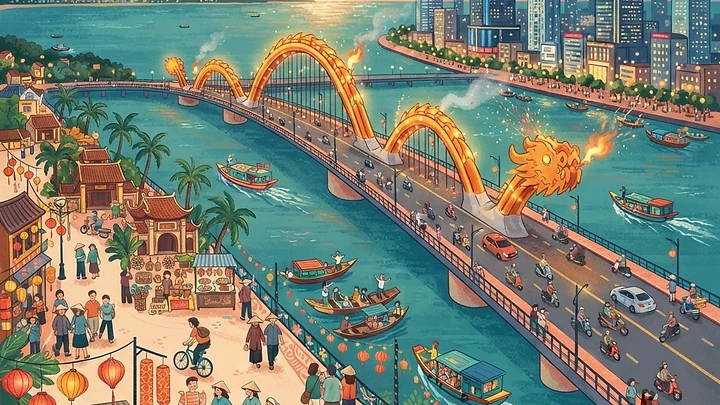
From Ancient Trade Port to Modern Skyline
The Dragon Bridge serves as the literal and metaphorical bridge between Da Nang's spiritual Cham heritage and its 21st-century status as Vietnam's most livable city. By connecting the historic Hai Chau district to the beachside energy of My Khe, this landmark encapsulates the rapid modernization that has defined the city since the mid-2000s.
The Symbolism of the Dragon
In Vietnamese culture, the dragon is a symbol of power, prosperity, and nobility. When the Dragon Bridge opened in 2013, it wasn't just a transport project; it was a declaration. Spanning the Han River, the steel beast breathes fire and water every weekend, drawing massive crowds. Locals and expats alike gather along the Bach Dang promenade to witness a spectacle that signals Da Nang's refusal to be a quiet coastal town.
Life in the Neighborhoods
- Hai Chau: The heartbeat of the city. Here, you find the administrative hubs and historic markets like Han Market. A bowl of Mi Quang costs around 30,000 to 50,000 VND ($1.20 - $2.00 USD).
- My Khe and An Thuong: The "Expat Hub." An Thuong is a walkable grid of craft beer bars, yoga studios, and cafes. You can grab a flat white for 45,000 VND ($1.80 USD) while enjoying the sea breeze.
- Son Tra: Known for its lush peninsula and the towering Lady Buddha. It offers a quieter vibe compared to the downtown scramble.
- Ngu Hanh Son (Marble Mountains): A spiritual escape. Exploring the caves costs approximately 40,000 VND ($1.60 USD) for entrance fees.
Why Da Nang is Thriving
Unlike the chaotic traffic of Hanoi or the corporate intensity of Ho Chi Minh City, Da Nang strikes a balance. Investment in infrastructure, widened boulevards, public parks, and high-end bridges, has attracted digital nomads from across the globe. Whether you are living in a modern apartment in My Khe or exploring the heritage sites, the city feels like a work in progress that genuinely cares about its residents' quality of life.
Practical Tips for 2026-2027
- Transport: Renting a scooter remains the best way to get around. Prices range from 1,200,000 to 1,500,000 VND ($48 - $60 USD) per month for a reliable model.
- Connectivity: The city boasts some of the fastest public Wi-Fi in the region, making it an ideal base for remote work.
- Dining: Don't just stick to Western cafes. The local street food scene near the riverfront provides an authentic taste of Central Vietnamese cuisine that you cannot replicate elsewhere.
As you navigate the bridge at night, seeing the skyline shimmer, you realize that Da Nang hasn't just replaced its history; it has woven it into a vibrant, neon-lit future.
Quick answers
- When does the Dragon Bridge breathe fire?
- The Dragon Bridge typically performs its fire and water show on weekend nights, usually starting around 9:00 PM.
- Which neighborhood is best for expats in Da Nang?
- An Thuong and My Khe are the most popular neighborhoods for expats due to their proximity to the beach and abundance of cafes.
- Is Da Nang expensive to live in?
- Da Nang remains very affordable, with comfortable living costs typically ranging between $800 and $1,200 USD per month for most expats.
- What is the best way to travel around the city?
- Renting a scooter is the most practical and cost-effective way to navigate Da Nang's wide, well-maintained boulevards.
More on Culture & History
All Culture & History articles

Da Nang Cathedral: The Pink Church Guide for Visitors
Da Nang Cathedral, known as the Pink Church or Rooster Church, is one of the city's most iconic landmarks. This guide covers history, opening hours, mass times, photo tips and everything nearby.

Dragon Bridge Da Nang: Fire Show Guide, Best Spots and Tips
The Dragon Bridge in Da Nang puts on a free fire and water show every Friday, Saturday and Sunday at 21:00. This guide covers the best places to watch, how to avoid the crowds, and how to plan your whole evening around the show.

Indoor Things to Do in Da Nang for Adults: Museums, Galleries and Classes
Rain or heat ruining your beach plans? These indoor activities in Da Nang for adults, from Cham sculpture to cooking classes and spas, turn a wet day into a great one.
 Translate
