
Culture & History · 11 min read
Marble Mountains Da Nang: The Complete Visitor Guide
The Marble Mountains Da Nang (Ngu Hanh Son) are one of central Vietnam's most rewarding half-day trips, with ancient caves, Buddhist pagodas and coastal views all for under 100,000 VND per person. This guide covers tickets, the best route, cave highlights and everything you need to plan a great visit.
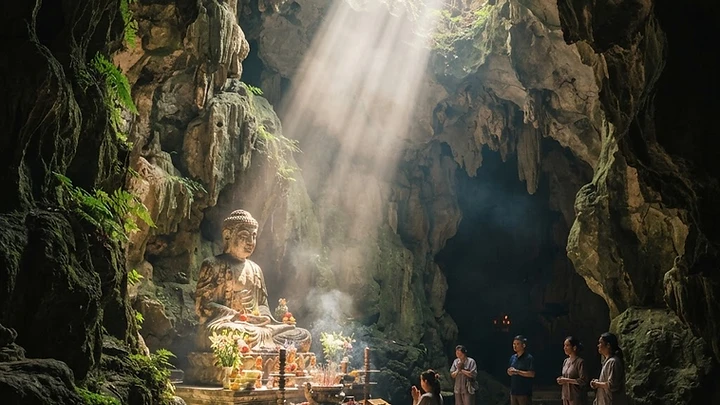
The Marble Mountains (Ngu Hanh Son) are a cluster of five limestone and marble hills located about 8 km southeast of Da Nang city center, sitting directly on the coastal road between Da Nang and Hoi An. As of October 2026, entry to the main mountain costs 40,000 VND per adult, a round-trip elevator ride adds 30,000 VND, and the separate Am Phu Cave costs 20,000 VND. Most visitors spend two to three hours here and leave having seen some of the most atmospheric caves and pagodas in central Vietnam. Confirm all prices at the ticket booth on arrival, as they can change.
What Are the Marble Mountains?
Ngu Hanh Son means "Five Element Mountains" in Vietnamese. Each of the five peaks is named after a classical element: water (Thuy Son), wood (Moc Son), fire (Hoa Son), metal (Kim Son) and earth (Tho Son). Only Thuy Son, the largest, is fully set up for visitors. It contains the caves, pagodas and viewpoints that make the complex famous.
The site carries Vietnam's highest heritage classification, recognized as a special national relic. Buddhist monks and local worshippers use the pagodas daily, so this is an active religious site, not a tourist attraction in the usual sense. For the full story behind the Cham origins and centuries of Buddhist history here, read The History of the Marble Mountains: Sacred Caves and Buddhist Traditions.
At the foot of the hills sits Non Nuoc stone carving village, a traditional craft area with workshops producing everything from palm-sized figurines to enormous garden statues. You pass through it on arrival.
Marble Mountains Da Nang Tickets: Full Price Breakdown
All tickets are sold separately at booths on site. There is no combined pass as of October 2026. Pay in Vietnamese dong cash. Some booths may accept QR bank transfers, but small notes are always the fastest option.
| Item | Adult Price (approx.) | Notes | |---|---|---| | Thuy Son entrance | 40,000 VND | Students and children under 6 pay less or free; bring ID | | Elevator one way | 15,000 VND | Up or down, your choice | | Elevator round trip | 30,000 VND | Worth it in the midday heat | | Am Phu Cave | 20,000 VND | Separate entrance at the base of the mountain | | Local guide | 50,000 to 200,000 VND | Not mandatory; ask at the entrance area |
Two adults who take the elevator up, walk down and visit Am Phu will spend around 150,000 VND total. That is exceptional value compared with most major attractions in the region.
If You Are Booking a Marble Mountains Tour
Many half-day tours from Da Nang or Hoi An include a stop here. Always check the includes and excludes list before booking. Some marble mountains tour packages bundle entrance fees; others list them as extras. Read carefully so you are not surprised at the gate. If you want to combine the mountains with a food experience, a guided Da Nang Food Tour can pair with a morning at the mountains for a well-rounded full-day itinerary.
Opening Hours and the Best Time to Arrive
Opening hours: 7:00 AM to 5:30 PM daily (as of October 2026, confirm locally on public holidays).
The single best piece of advice for this site: arrive when the gates open at 7:00 AM. Here is why it makes such a difference:
- Temperatures are noticeably cooler than at midday, when the stone paths and cave walls radiate heat.
- Tour buses from Hoi An typically arrive between 9:30 AM and noon, packing the narrow cave passages and stairways.
- The natural light shafts inside Huyen Khong Cave are at their most dramatic in the mid-morning, which you can enjoy before the crowds arrive.
- You can finish the main circuit comfortably before 10:00 AM and have the rest of the day free for the beach or Hoi An.
If 7:00 AM is not realistic, late afternoon from around 3:30 PM onward is the next best option. Crowds thin out and the light turns golden. Just make sure you allow enough time before 5:30 PM closing.
What Season Is Best?
The dry season from March to August is the most comfortable time for a climb. Da Nang's heaviest rain falls from around September to December. Wet stone steps become genuinely slippery and some cave floors turn muddy in heavy rain. If the forecast looks bad, check our indoor activities guide for Da Nang adults for alternatives and save the mountains for a clearer day.
How to Get to the Marble Mountains From Da Nang
The mountains are at 81 Huyen Tran Cong Chua Street, Hoa Hai Ward, Ngu Hanh Son District, Da Nang. They sit directly on the coastal road between Da Nang and Hoi An, making them easy to reach from either direction.
- Grab (bike or car): The easiest and most flexible option. A GrabBike from central Da Nang typically costs under 100,000 VND and takes 15 to 20 minutes. A GrabCar runs roughly 200,000 to 300,000 VND as of October 2026; confirm in the app before booking.
- Private car or driver: Ideal if you plan to continue south to Hoi An the same day. A driver can wait at the base while you explore.
- Motorbike: The coastal road is flat and well-marked. Parking is available near the entrances. Only ride if you are a licensed, confident rider.
- Guided tour: A half-day tour with a local guide suits anyone who wants historical context beyond what the on-site signage provides. Guides typically charge 50,000 to 200,000 VND.
Parking note: When you arrive, drivers or staff near showrooms may steer you toward a parking spot attached to a carving shop. There is no obligation to buy anything. Walk directly to the ticket booth.
Step-by-Step Route Inside Thuy Son
Several paths connect across the mountain so you will not get lost, but a planned route saves energy and ensures you see the highlights. This circuit works well for most first-time visitors and takes two to three hours at a relaxed pace.
- Buy your Thuy Son entrance ticket at the main booth near the elevator base.
- Ride the elevator up (15,000 VND one way) to the first temple level, skipping roughly 108 to 156 stone steps depending on which staircase you would otherwise take.
- Visit Linh Ung Pagoda and the nearby coastal viewpoints overlooking the beach and the South China Sea.
- Take the path toward Tang Chon Cave, a quieter cave with stalactites and small shrines, good for photos without the crowd.
- Continue to Van Thong Cave if you want an adventure. Part of the route involves a narrow rocky passage with a sky opening at the top. Skip it entirely if you are wearing sandals or carrying a large bag.
- Cross to Tam Thai Pagoda, a 17th-century temple and one of the most peaceful spots on the mountain.
- Enter Huyen Khong Cave through the stone gate behind Tam Thai. This is the undisputed highlight of the entire site. Prioritize it early before tour groups fill the chamber.
- Climb toward a summit lookout if you have energy remaining. The final steps are steep and uneven but the view over the coast is worth the effort.
- Walk down the stairs rather than queuing again for the elevator.
- Finish with Am Phu Cave at the base, using its separate entrance and 20,000 VND ticket.
Shorter version for families or visitors with limited mobility: Take the elevator up, visit Linh Ung Pagoda and the coastal viewpoints, then come back down. The elevator only covers the first ascent. Paths between caves still involve uneven rock and stone steps throughout, so footwear always matters.
The Caves: What to Prioritize
Huyen Khong Cave
This is the cave not to miss under any circumstances. You pass through a narrow entrance into a vast chamber with a high domed ceiling. Buddhist altars and statues line the walls, and incense smoke drifts upward through natural openings in the rock. On sunny mornings, shafts of light drop through those openings and light up the interior in a way that photographs cannot fully capture. It is one of the most visually striking spaces anywhere in Da Nang. Plan your route so you reach it before the main tour groups arrive.
Am Phu Cave
Known informally as the "hell cave," Am Phu illustrates Buddhist ideas about the afterlife through dramatic carved sculptures. The lower section depicts punishments and consequences; a walk upward leads toward a brighter heaven area. It is theatrical and memorable in equal measure. Parents of younger children may want to preview it first before bringing kids through. It sits at the base of the mountain with its own separate 20,000 VND ticket, so you can visit before or after the main climb.
Tang Chon Cave
Smaller and usually quieter than Huyen Khong, Tang Chon has stalactites, atmospheric dim lighting and small shrines tucked into the walls. A good stop when the bigger cave feels crowded, and worth a few minutes even if it is not.
Van Thong Cave
For visitors who want something physically engaging. The route involves climbing through a tight passage toward a natural sky opening at the top. It is not suitable for anyone wearing flip-flops, carrying a large bag, or uncomfortable in confined spaces. In wet conditions, skip it entirely.
Elevator or Stairs: A Quick Comparison
The short answer for most visitors is: take the elevator up and the stairs down.
| Option | Cost | Steps saved | Best for | |---|---|---|---| | Elevator up | 15,000 VND | 108 to 156 steps | Midday visitors, families, anyone saving energy | | Stairs up (main route) | Free | None | Early morning, budget travellers, fitness walkers | | Elevator down | 15,000 VND | Same | Visitors with knee or mobility concerns | | Stairs down | Free | None | Most visitors, faster than queuing |
The elevator only covers the first ascent to the temple level. Paths between the caves still involve uneven stone steps and short climbs throughout the mountain regardless of how you arrive at the top.
What to Wear and Bring
The Marble Mountains are both a religious site and a physical one. Prepare for both.
- Grip shoes: Sneakers or closed sandals with straps. Flip-flops are the most common cause of minor injuries on site.
- Modest clothing: Shoulders and knees must be covered to enter the pagodas. A light scarf or sarong in your bag solves this easily.
- Water: At least one bottle per person. Vendors operate at the base but not reliably on the mountain paths.
- Cash: Small notes in Vietnamese dong for tickets, the elevator, drinks and optional small donations at shrines.
- Phone flashlight: Some cave corners are too dim for phone cameras without one.
- Sun protection: Hat and sunscreen for the exposed lookout points, which have little shade.
Pagoda Etiquette
Remove hats and shoes before entering pagodas. Speak quietly inside. Do not climb on altars or statues, and avoid pointing your feet toward a Buddha image when sitting. Ask before photographing anyone who is praying. Monks and local worshippers use these spaces every day.
Shopping at Non Nuoc Stone Carving Village
The carving village at the base of the mountains is a genuine traditional craft area and worth a short browse even if you do not plan to buy. Workshops produce everything from small decorative animals to large garden statues.
Practical notes for shoppers:
- Not every piece is made from local marble. Some use stone from other regions. Ask directly and buy based on whether you like the piece, not the label.
- Prices on larger items are usually negotiable. Stay friendly and walk away calmly if the number does not feel right.
- Stone is heavy. For anything larger than carry-on size, ask about packing and shipping costs in writing, including who covers import fees at your destination.
- Small carvings, coasters and incense holders travel easily and make thoughtful, lightweight souvenirs.
Common Mistakes to Avoid
- Arriving at midday. The stone paths radiate heat, caves fill with tour groups, and the climb feels twice as hard as it needs to be.
- Wearing slippery shoes. Worn stone steps plus humidity is a combination that causes falls. Good shoes cost nothing extra.
- Skipping Huyen Khong Cave. Some visitors run out of energy before reaching it. Build your route around it as a priority, not an afterthought.
- Forgetting cash. Card acceptance is inconsistent across ticket booths and vendors. Small dong notes are always reliable.
- Underestimating time. Budget at least two hours for the main circuit. Three hours is more comfortable if you want to explore without rushing.
- Visiting in heavy rain. The steps become genuinely dangerous when wet. Save the trip for a dry day.
Combining the Marble Mountains With Other Sights
Because the site sits directly between Da Nang and Hoi An, it pairs naturally with a day trip south. A popular plan: arrive at the mountains at 7:00 AM, finish by 10:00 AM, have lunch near the beach, and reach Hoi An by early afternoon for the old town and evening lanterns.
If you are based in Da Nang, My Khe Beach is just minutes away. A morning climb followed by a swim is a satisfying combination that requires no extra transport planning. The Da Nang Cathedral is a short drive north and adds another 30 minutes of sightseeing for anyone building a half-day circuit.
If you are visiting during Tet or a major Vietnamese holiday, note that the mountains can be busier than usual and some nearby businesses adjust their hours. Our Tet in Da Nang guide covers what to expect at the mountains and around the city during the Lunar New Year period.
Ready to Plan Your Visit?
The Marble Mountains reward anyone who arrives early, wears the right shoes and gives themselves enough time to find Huyen Khong Cave. The total cost for a full visit is well under 100,000 VND per person, making it one of the best-value half-days in central Vietnam.
Browse the full Da Nang directory on the map to find cafes, beaches, restaurants and more sights near the mountains, all with hours, directions and reviews in one place.
Quick answers
- Is there a combined ticket for the Marble Mountains?
- No, there is no combined or all-access pass as of October 2026. You must buy separate tickets for Thuy Son entrance (40,000 VND), the elevator (15,000 VND per way) and Am Phu Cave (20,000 VND). All are sold at booths on site. Confirm prices locally when you arrive.
- How much time do you need at the Marble Mountains?
- Plan for two to three hours to comfortably explore the main caves, pagodas and viewpoints on Thuy Son. Add extra time if you want to browse the Non Nuoc stone carving village at the base or linger at the summit viewpoint. Rushing the circuit in under 90 minutes means missing Huyen Khong Cave.
- Is the elevator at the Marble Mountains worth it?
- Yes for most visitors, especially if you arrive after 9:00 AM when the heat builds. The elevator costs 15,000 VND one way and skips 108 to 156 stone steps. It only takes you to the first temple level, not to the top of the mountain, so expect further steps and uneven paths regardless.
- Do I need a guide at the Marble Mountains?
- A guide is not mandatory but adds real value. On-site signage is limited and the history of the caves, from Cham origins to wartime use, is fascinating with context. Local guides typically charge 50,000 to 200,000 VND. Alternatively, read our history article before you go to arrive informed.
- Can you visit the Marble Mountains in the rain?
- It is not recommended. The stone steps and cave floors become slippery and genuinely dangerous when wet. Some lower cave areas can also become muddy. If rain is forecast, consider saving the visit for a dry day and checking our Da Nang indoor activities guide for alternatives in the meantime.
- Are the Marble Mountains suitable for children?
- Yes, with some preparation. The terrain is uneven and involves many stone steps, so the site is not suitable for strollers. Young children should wear grip shoes and stay close to adults on narrow paths. The Am Phu Cave contains dramatic afterlife sculptures that some younger children may find unsettling, so preview it first.
- How far are the Marble Mountains from Hoi An?
- The Marble Mountains sit directly on the coastal road between Da Nang and Hoi An, roughly 30 to 40 minutes by car from Hoi An's old town as of October 2026. This makes them a natural and popular stopover on a day trip between the two cities, with no backtracking required.
More on Culture & History
All Culture & History articles

Da Nang Cathedral: The Pink Church Guide for Visitors
Da Nang Cathedral, known as the Pink Church or Rooster Church, is one of the city's most iconic landmarks. This guide covers history, opening hours, mass times, photo tips and everything nearby.


Dragon Bridge Da Nang: Fire Show Guide, Best Spots and Tips
The Dragon Bridge in Da Nang puts on a free fire and water show every Friday, Saturday and Sunday at 21:00. This guide covers the best places to watch, how to avoid the crowds, and how to plan your whole evening around the show.

Indoor Things to Do in Da Nang for Adults: Museums, Galleries and Classes
Rain or heat ruining your beach plans? These indoor activities in Da Nang for adults, from Cham sculpture to cooking classes and spas, turn a wet day into a great one.